

Haemodiafiltration (HDF): How It Works and Why It Matters
Disclaimer: This content is for educational purposes only and is not a substitute for professional clinical advice from a healthcare provider.
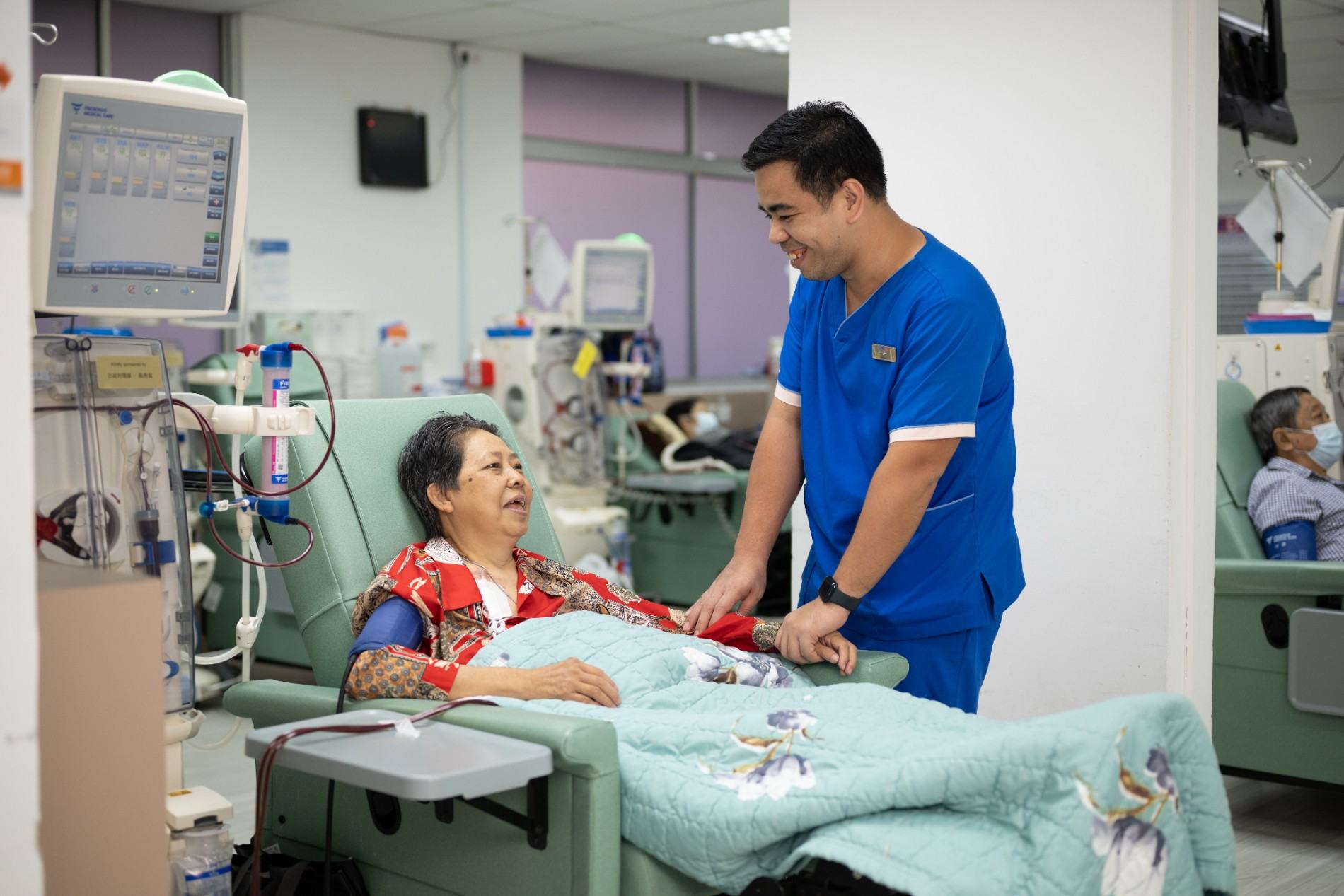
Haemodiafiltration (HDF) is an advanced form of renal replacement therapy for kidney failure patients. It combines two mechanisms of toxin removal – diffusion and convection – to clear a broader range of waste molecules from the blood than conventional haemodialysis. Clinical evidence increasingly supports HDF as a superior dialysis modality for improving survival outcomes in kidney failure patients, and it is now available at select dialysis centres in Singapore, including those operated by KDF.
Table of Contents
- What Is Haemodiafiltration?
- How Does Haemodiafiltration Work?
- Haemodiafiltration vs Haemodialysis: What Is the Difference?
- Clinical Benefits of Haemodiafiltration
- Who Is Suitable for Haemodiafiltration?
- Are There Any Risks or Limitations?
- Haemodiafiltration at KDF
- Frequently Asked Questions About Haemodiafiltration
- Advancing Kidney Care in Singapore
What Is Haemodiafiltration?
Haemodiafiltration is a blood purification therapy used to treat kidney failure when the kidneys can no longer filter waste products and excess fluid from the blood. Like haemodialysis, it requires vascular access – typically an arteriovenous (AV) fistula – and is performed at a dialysis centre three times per week, with each session lasting approximately three to four hours.
What sets HDF apart from standard haemodialysis is its ability to remove not only small waste molecules (such as urea and creatinine) but also larger molecules known as middle molecules (such as beta-2 microglobulin), which are associated with long-term dialysis complications when they accumulate in the body.
How Does Haemodiafiltration Work?
HDF combines two distinct processes of toxin removal:
Diffusion
Diffusion is the same mechanism used in conventional haemodialysis. Small waste molecules – such as urea, creatinine, potassium, and phosphate – pass passively from the patient’s blood across a semi-permeable membrane into the dialysate (cleansing fluid), driven by the difference in concentration between the two sides. This effectively removes small, readily dialysable toxins.
Convection
Convection is the additional mechanism that distinguishes HDF from standard haemodialysis. A large volume of fluid is forced out of the blood under pressure – a process called ultrafiltration. As this fluid is pushed across the membrane, it carries larger middle molecules along with it. This solvent drag removes toxins that diffusion alone cannot effectively clear.
The volume of fluid removed by convection per session is a critical determinant of HDF’s effectiveness. High-volume HDF – defined as a convection volume of 23 litres or more per session – has been shown in clinical trials to produce the most significant improvements in patient outcomes.[1]
Fluid Replacement
Because HDF removes a much larger volume of fluid from the blood than standard haemodialysis, a sterile, pyrogen-free substitution fluid must be continuously infused back into the patient’s bloodstream during the session to maintain fluid balance. This substitution fluid is generated online by the HDF machine from highly purified water, which is why HDF requires advanced equipment and strictly controlled water purification standards.
Haemodiafiltration vs Haemodialysis: What Is the Difference?
| Haemodialysis (HD) | Haemodiafiltration (HDF) | |
|---|---|---|
| Removal mechanism | Diffusion only | Diffusion and convection |
| Toxins removed | Small molecules | Small and middle molecules |
| Fluid replacement | Not required | Sterile substitution fluid infused |
| Equipment required | Standard dialysis machine | Advanced HDF machine with ultrapure water |
| Cardiovascular stability | Standard | Generally better |
| Long-term complication risk | Higher | Lower (with high-volume HDF) |
| Availability | Widely available | Available at select centres |
Clinical Benefits of Haemodiafiltration
The clinical evidence for HDF’s superiority over conventional haemodialysis has grown substantially in recent years:
Improved survival. The landmark CONVINCE randomised controlled trial (2023), involving 1,360 patients across Europe, demonstrated that high-dose HDF (convection volume above 23 litres per session) resulted in a 23 per cent lower risk of all-cause mortality compared to conventional high-flux haemodialysis.[1] Meta-analyses of multiple trials consistently show reductions in cardiovascular mortality with high-volume HDF.
Better blood pressure stability. HDF patients typically experience fewer episodes of intradialytic hypotension – sudden drops in blood pressure during treatment – which is one of the most common and disruptive complications of conventional haemodialysis. This improved haemodynamic stability means a more comfortable treatment experience.
Superior middle molecule clearance. Standard haemodialysis struggles to remove larger middle molecules such as beta-2 microglobulin. Over years of dialysis, these accumulate and contribute to a condition called dialysis-related amyloidosis – a painful long-term complication affecting joints and tendons. HDF significantly reduces this accumulation.
Reduced long-term complications. Beyond amyloidosis, better overall toxin clearance in HDF is associated with improvements in anaemia management, phosphate control, inflammation markers, and quality of life.
Faster recovery between sessions. Patients on HDF have generally reported better recovery time between dialysis sessions compared to those on conventional haemodialysis, allowing for greater energy and day-to-day wellbeing.
Who Is Suitable for Haemodiafiltration?
HDF is suitable for patients with kidney failure who are already on or preparing for haemodialysis. Clinical evidence suggests the greatest survival benefit is seen in:
- Younger patients with fewer co-morbidities
- Patients with high cardiovascular risk
- Those with high levels of middle molecule toxins
- Patients with higher serum creatinine and albumin levels
However, HDF requires adequate vascular access that can sustain the higher blood flow rates needed for effective convective volume delivery. Patients with poor vascular access or specific medical contraindications may not be suitable. Your nephrologist will assess whether HDF is appropriate for your individual situation.
Are There Any Risks or Limitations?
HDF is generally safe and well tolerated. However, there are some considerations:
- Equipment and infrastructure requirements – HDF requires advanced dialysis machines and an ultrapure water supply, which means it is only available at centres with the appropriate equipment
- Albumin loss – HDF can result in slightly greater loss of albumin compared to standard haemodialysis; this is monitored by the care team and managed through adequate dietary protein intake
- Availability – HDF is not universally available and is offered at select dialysis centres in Singapore
- Cost – HDF carries a higher cost than standard haemodialysis due to the specialised equipment and substitution fluid required
Haemodiafiltration at KDF
The Kidney Dialysis Foundation (KDF) offers haemodiafiltration at selected dialysis centres in Singapore, reflecting our commitment to advancing the standard of care for kidney failure patients. KDF’s HDF programme provides eligible patients with access to this advanced treatment modality within a subsidised, patient-centred care environment.
If you are currently on haemodialysis and would like to find out whether HDF may be suitable for you, speak to your nephrologist or contact KDF for more information about our HDF programme and which centres offer this treatment.
Frequently Asked Questions About Haemodiafiltration
What is the difference between haemodialysis and haemodiafiltration? Haemodialysis uses diffusion to remove small waste molecules from the blood. Haemodiafiltration adds convection – using pressure to force fluid and larger toxins across the membrane – allowing removal of a broader range of waste molecules, including middle molecules linked to long-term dialysis complications.
Is haemodiafiltration better than haemodialysis? Clinical evidence, including the 2023 CONVINCE trial[1], indicates that high-volume HDF is associated with a 23 per cent lower risk of all-cause mortality compared to conventional haemodialysis. It also offers better blood pressure stability and reduced long-term complications. However, not every patient is a suitable candidate and availability depends on centre equipment.
Is haemodiafiltration painful? HDF is not painful. Like haemodialysis, patients may experience mild discomfort at the vascular access site during needle insertion. HDF is generally associated with better treatment tolerance and fewer symptoms such as blood pressure drops during the session.
How long does a haemodiafiltration session take? A standard HDF session takes approximately three to four hours, three times per week – the same schedule as conventional haemodialysis.
Is haemodiafiltration available in Singapore? Yes. HDF is available at select dialysis centres in Singapore, including KDF’s centres. Contact KDF to find out which of our centres offer HDF and whether you may be eligible.
Advancing Kidney Care in Singapore
Haemodiafiltration represents a meaningful step forward in dialysis care. For eligible kidney failure patients, it offers the opportunity for better outcomes, fewer complications, and improved quality of life compared to conventional haemodialysis. As clinical evidence continues to strengthen – and as infrastructure in Singapore expands – HDF is increasingly becoming the standard of care for patients who can benefit from it.
KDF is committed to making advanced kidney care accessible to needy patients in Singapore. Contact us to learn more about our haemodiafiltration programme, subsidy eligibility, and how we can support you or your loved one through the kidney failure journey.
Resources
[1] Vernooij RW et al. – Effect of Hemodiafiltration or Hemodialysis on Mortality in Kidney Failure (CONVINCE Trial). New England Journal of Medicine, 2023