

Haemodialysis: What It Is and What to Expect
Disclaimer: This content is for educational purposes only and is not a substitute for professional clinical advice from a healthcare provider.
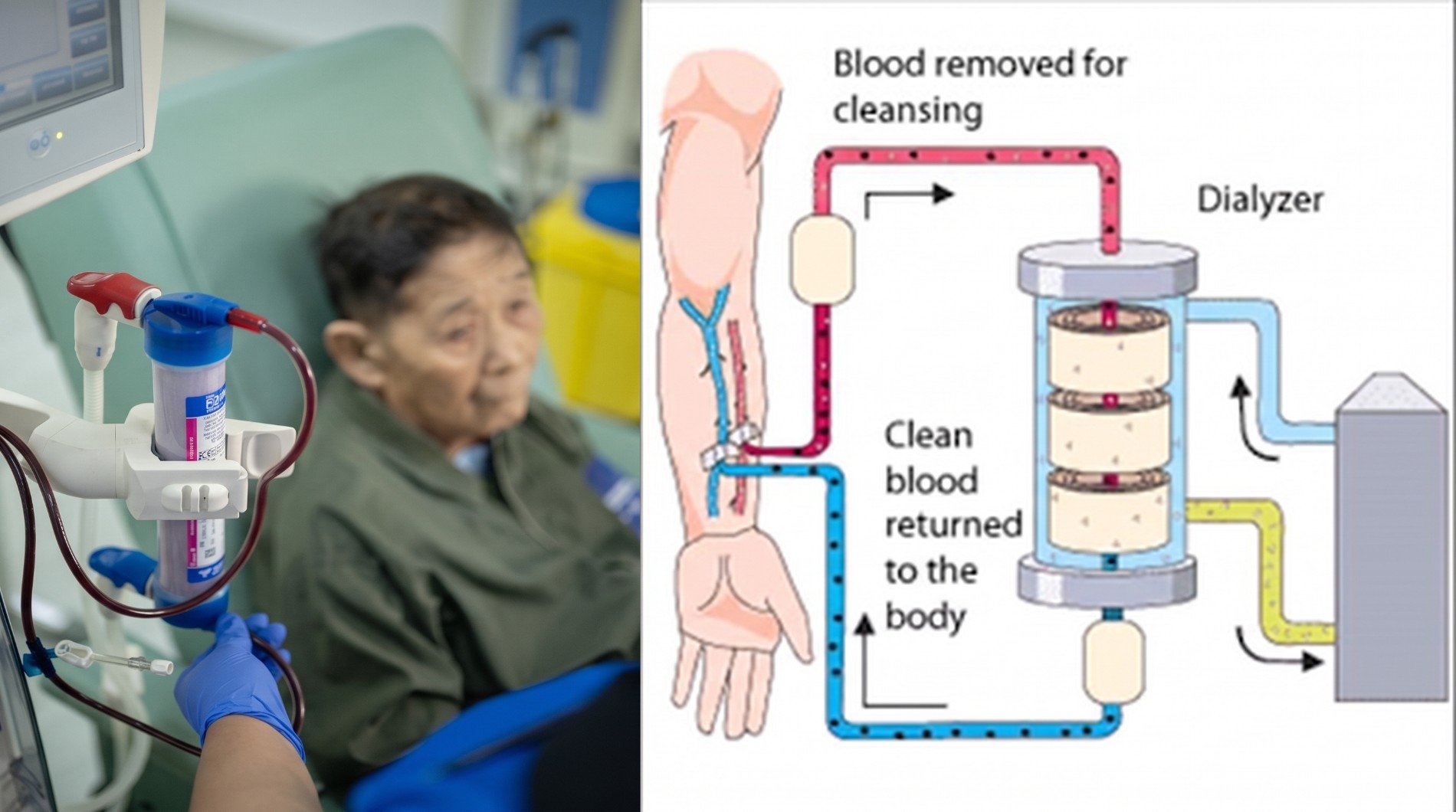
Table of Contents
What Is Haemodialysis?
Haemodialysis is one of the main treatment options for kidney failure, a condition in which the kidneys can no longer filter waste products, excess fluids, and salts from the blood on their own. It is the most widely used form of dialysis in Singapore and is typically performed at a dialysis centre three times a week.
During haemodialysis, a dialysis machine takes over the filtering work that healthy kidneys would normally do. It removes harmful waste products and excess water from the blood, helps maintain the correct balance of electrolytes such as potassium, sodium, and chloride, and keeps blood pressure under control.
To perform haemodialysis, a patient requires vascular access – a surgically created entry point to the bloodstream. The most common form of access is the arteriovenous (AV) fistula, a specially created vein in the arm formed by connecting an artery and a vein together. This allows blood to flow at a rate high enough for effective dialysis.
How Does Haemodialysis Work?
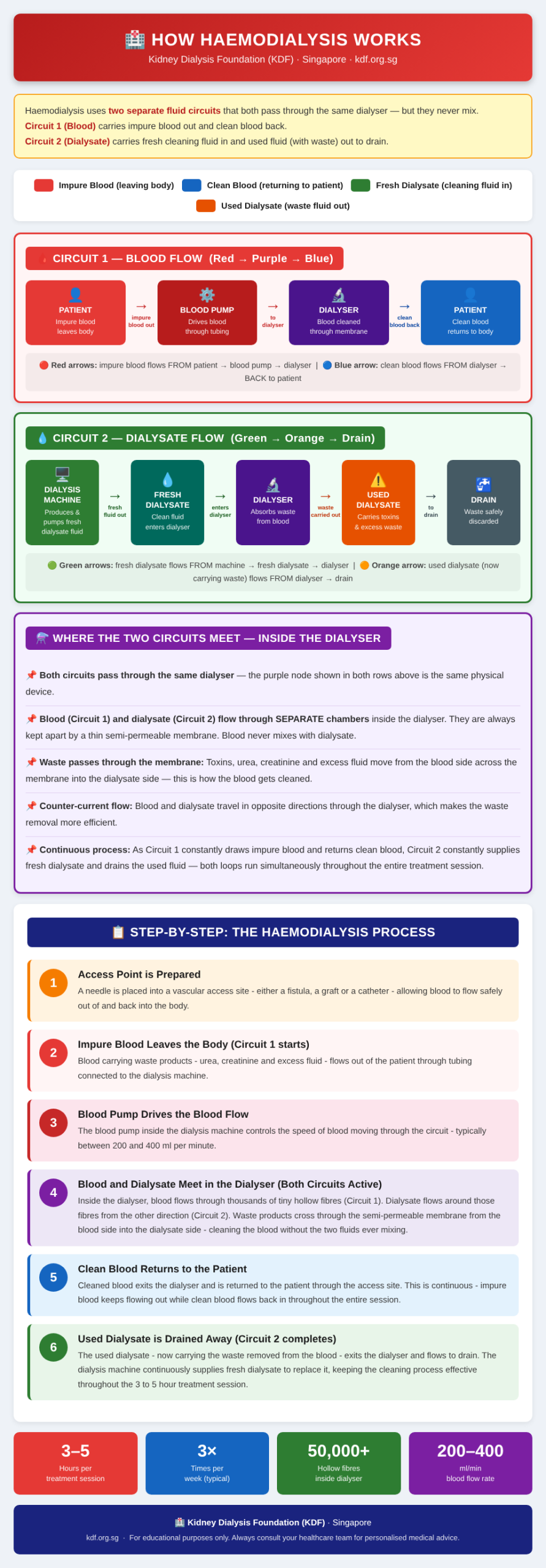
At the start of each session, two needles are inserted into the vascular access site. Blood is drawn from the body through tubing and pumped into the dialyser – an artificial kidney made up of thousands of tiny fibres with semi-permeable membranes.
Inside the dialyser, waste products and excess fluids pass from the blood across the membrane into a cleansing solution called dialysate. The dialysate has a salt composition similar to blood but contains no waste products, allowing waste to move across the membrane by a process called diffusion. The cleaned blood is then returned to the patient’s body.
Each haemodialysis session takes approximately four hours. Patients typically attend three sessions per week, which may be scheduled on alternating days such as Mondays, Wednesdays, and Fridays, or Tuesdays, Thursdays, and Saturdays.[1] The exact schedule will be determined by your care team based on your medical condition and body size.
Advantages and Disadvantages of Haemodialysis
Choosing the right dialysis method depends on your medical condition, lifestyle, and personal circumstances. Your nephrologist will guide you through the decision. Understanding the advantages and disadvantages of haemodialysis can help you have a more informed conversation with your care team.
Advantages of Haemodialysis
- Clinical supervision throughout each session. Treatment is performed and monitored by trained nurses at the dialysis centre, meaning patients do not need to manage the process themselves. Nursing staff monitor vital signs, equipment performance, and overall patient wellbeing throughout each four-hour session.
- Structured schedule with free days. Three scheduled sessions per week leave four days free from treatment, giving patients time to rest, work, and attend to daily activities. For many patients, this regular rhythm makes it easier to plan their week around treatment.
- Social connection at the centre. Regular visits to the dialysis centre provide meaningful social interaction with nursing staff and fellow patients. For some individuals, particularly those who live alone, this routine contact can help reduce feelings of isolation.
- Regular health monitoring. Blood pressure, fluid levels, and other key health markers are closely assessed at every session. This consistent clinical oversight helps the care team identify and respond to any changes in the patient’s condition promptly.
Disadvantages of Haemodialysis
- Travel to a dialysis centre three times per week. Patients must travel to a dialysis centre on each treatment day, which can be challenging for those with limited mobility, those who live far from a centre, or those who depend on arranged transport.
- Fixed treatment schedule. Haemodialysis follows a fixed schedule that can be difficult to rearrange. Patients need to plan their work, family, and social commitments around their dialysis days, which can limit flexibility, particularly for those who are still working or have caregiving responsibilities.
- Extended time in the dialysis chair. Each session involves sitting or reclining in a dialysis chair for approximately four hours. Some patients experience fatigue, muscle cramps, or a general sense of tiredness in the hours following treatment, particularly in the early stages of dialysis.
- Dietary and fluid management between sessions. Because haemodialysis is performed only three times a week, waste products and excess fluid accumulate in the body between sessions. Patients are advised to follow dietary restrictions limiting potassium, phosphorus, and sodium intake, as well as daily fluid limits, to reduce the build-up between treatments.
Haemodialysis at KDF’s Dialysis Centres in Singapore
The Kidney Dialysis Foundation (KDF) provides subsidised haemodialysis treatment to needy kidney patients across our dialysis centres in Singapore. Our centres offer both haemodialysis (HD) and haemodiafiltration (HDF) – an advanced variation of treatment that removes a wider range of toxins and waste molecules from the blood. Our centres are staffed by trained nurses and supported by nephrologists who oversee patient care at every session.
Beyond the treatment itself, KDF takes a holistic approach to patient wellbeing. Our centres are equipped with advanced monitoring technologies, including BTM for integrated vascular access monitoring, Crit-Line for real-time blood volume monitoring, BCM for body composition monitoring, and ultrasound cannulation guidance for precise vascular access. Our wrap-around programmes include physiotherapy, psychosocial support, and patient education – because we believe that good kidney care extends beyond the dialysis chair.
Eligible Singapore Citizens and Permanent Residents may apply for subsidised haemodialysis through KDF. Patients are typically referred by a Medical Social Worker or Renal Coordinator from a public hospital. If you or a loved one requires dialysis treatment and financial assistance, contact KDF to find out more about eligibility and the referral process.
Frequently Asked Questions About Haemodialysis
What is the difference between haemodialysis and dialysis?
Dialysis is the broad term for treatments that filter waste from the blood when the kidneys fail. Haemodialysis is one specific type of dialysis that uses a machine and dialyser to cleanse the blood externally.
How long does a haemodialysis session take?
Each session takes approximately four hours and is typically performed three times per week, depending on the patient’s medical condition and body size.
Is haemodialysis painful?
Haemodialysis itself is not painful. Some patients may experience mild discomfort during needle insertion at the AV fistula site. Your care team will help manage any discomfort throughout the session.
What is an AV fistula and why is it needed for haemodialysis?
An arteriovenous (AV) fistula is a surgically created connection between an artery and a vein in the arm. It provides reliable access to the bloodstream for haemodialysis and is the preferred access method due to its durability and lower infection risk.
Does KDF provide subsidised haemodialysis in Singapore?
Yes. KDF offers highly subsidised haemodialysis treatment to eligible needy Singapore Citizens and Permanent Residents across our dialysis centres. Contact us to find out about eligibility and the referral process.