

Peritoneal Dialysis: How It Works, Types and Who It Is For
Disclaimer: This content is for educational purposes only and is not a substitute for professional clinical advice from a healthcare provider.
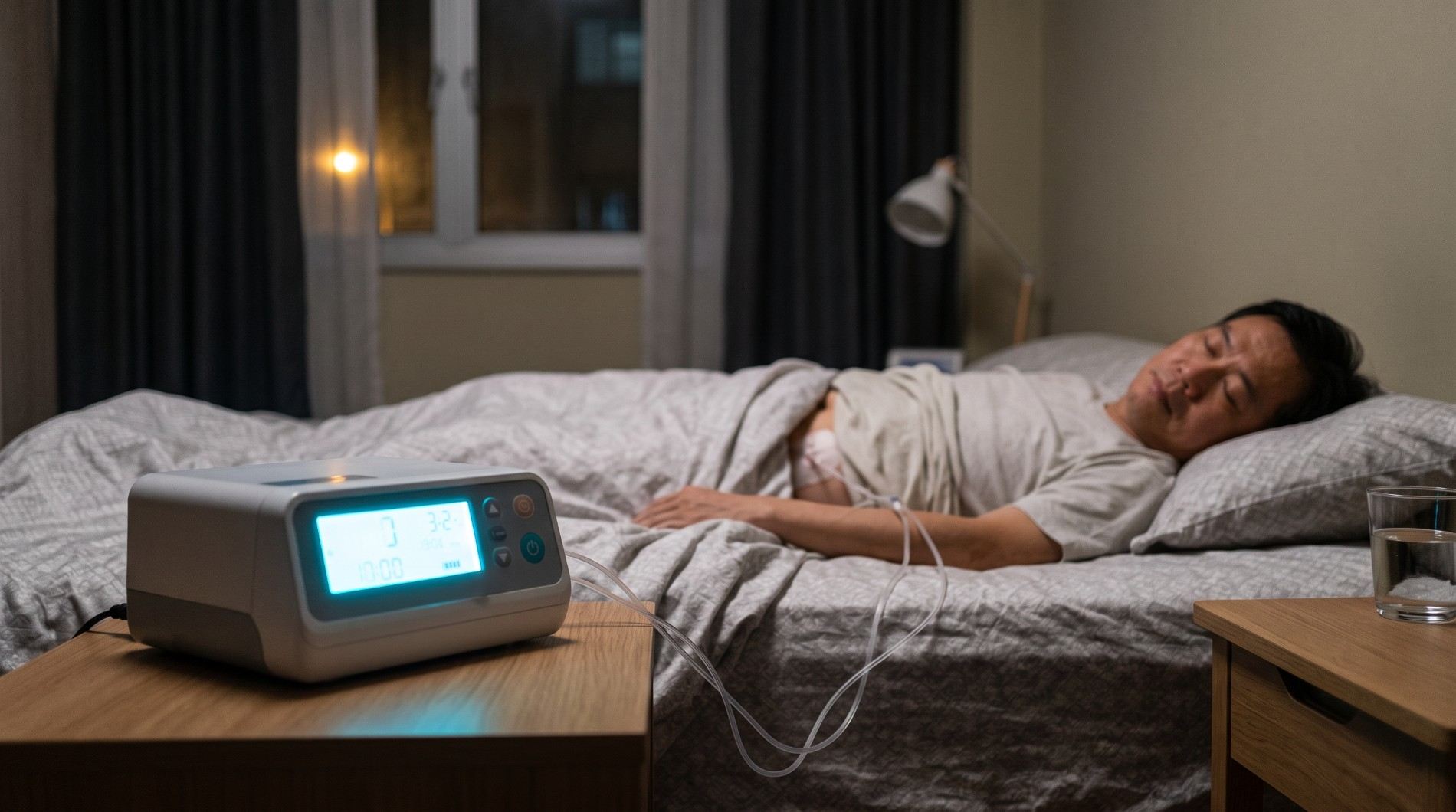
Peritoneal dialysis (PD) is a home-based treatment for kidney failure that uses the natural lining of the abdomen, the peritoneal membrane, to filter waste products and excess fluid from the blood. It is one of two main forms of dialysis available in Singapore, alongside haemodialysis, and offers patients greater flexibility and independence in managing their treatment.
Table of Contents
- What Is Peritoneal Dialysis?
- How Does Peritoneal Dialysis Work?
- Types of Peritoneal Dialysis
- CAPD vs APD: Which Is Right for You?
- Who Is Suitable for Peritoneal Dialysis?
- Advantages and Disadvantages of Peritoneal Dialysis
- Peritoneal Dialysis vs Haemodialysis
- Living With Peritoneal Dialysis
- Subsidised Peritoneal Dialysis at KDF
- Frequently Asked Questions About Peritoneal Dialysis
- Take the Next Step Towards Kidney Care
What Is Peritoneal Dialysis?
When the kidneys fail, they can no longer remove waste products, excess fluid, and salts from the blood. Peritoneal dialysis replaces this function by using the peritoneum – a thin membrane that lines the inner abdominal wall and covers the abdominal organs – as a natural filter.
A sterile dialysis solution (dialysate) is introduced into the abdominal cavity through a soft tube called a peritoneal dialysis catheter. Waste products from the blood vessels lining the peritoneum pass through the membrane into the dialysate. The used solution, now containing waste, is then drained out and replaced with fresh solution.
This process is called an exchange.
How Does Peritoneal Dialysis Work?
Before starting peritoneal dialysis, a minor surgical procedure is required to insert a soft, flexible catheter into the abdomen, usually near the navel. The catheter remains in place permanently and is used to fill and drain the dialysis solution. Most patients can begin dialysis approximately two weeks after the catheter is inserted, once the site has healed sufficiently.
Each exchange follows three steps:
Step 1 – Fill
Fresh dialysis solution flows from a bag through the catheter into the abdominal cavity. It takes approximately 10 minutes for two litres of solution to completely fill the peritoneal cavity.
Step 2 – Dwell
The solution remains in the abdomen for a prescribed period – typically four to six hours during the day. During this time, the peritoneal membrane acts as a filter, allowing waste products, excess fluid, and electrolytes to pass from the blood into the dialysate.
Step 3 – Drain
The used solution, now carrying waste products, is drained out of the abdomen through the catheter and into an empty bag. Draining takes approximately 20 minutes. Fresh solution is then introduced and the cycle begins again.
Types of Peritoneal Dialysis
There are two forms of peritoneal dialysis, both of which can be performed at home:
CAPD (Continuous Ambulatory Peritoneal Dialysis)
CAPD is a manual, machine-free form of peritoneal dialysis performed during the day. The exchange is carried out by gravity – a bag of fresh dialysis solution is hung on a stand and flows into the abdomen, dwells for the prescribed time, then is drained into an empty bag.
Patients typically perform three to five exchanges per day, each taking approximately 20 to 30 minutes. Between exchanges, patients are free to go about their normal activities – working, travelling, or resting – with the dialysis solution dwelling in the abdomen.
A typical CAPD schedule for a working patient might be: an exchange at home in the morning, one during lunch, one after returning from work, and a final exchange before sleep.
APD (Automated Peritoneal Dialysis)
APD uses an automated cycler machine to perform dialysis exchanges overnight while the patient sleeps. The machine is connected to the PD catheter at night and automatically fills and drains the dialysis solution over eight to ten hours, performing multiple cycles.
Patients disconnect from the machine in the morning and are generally free to carry on with normal daily activities. Some patients may require one additional exchange during the day depending on their medical prescription.
APD tends to cause less abdominal discomfort than CAPD because exchanges are performed while the patient is lying down, which reduces the pressure felt in the abdomen.
CAPD vs APD: Which Is Right for You?
| CAPD | APD | |
|---|---|---|
| Machine required | No | Yes |
| Exchanges | 3 to 5 times daily, manually | Once nightly, automated |
| Duration per session | 20 to 30 minutes | 8 to 10 hours overnight |
| Daytime freedom | Between exchanges | Full daytime freedom |
| Suitable for | Those who prefer no machine | Those who prefer overnight treatment |
| Portability | Highly portable | Machine required at night |
Your nephrologist and dialysis care team will assess which type is more appropriate for your medical needs, lifestyle, and living situation.
Who Is Suitable for Peritoneal Dialysis?
Peritoneal dialysis may be recommended for patients who:
- Prefer a home-based treatment with greater independence
- Have a stable living environment suitable for performing dialysis
- Are able to manage the process themselves or with a trained caregiver
- Want to avoid needles (unlike haemodialysis, PD requires no vascular access or needling)
- Have residual kidney function that benefits from the gentler, continuous filtration of PD
Peritoneal dialysis may not be suitable for patients who:
- Have extensive abdominal surgical scarring that affects catheter placement
- Have an unrepaired hernia
- Have inflammatory bowel disease or other abdominal conditions
- Have limited manual dexterity and no caregiver to assist
- Live in an environment that cannot be kept sufficiently clean and hygienic
In these cases, haemodialysis or kidney transplantation may be more appropriate. Your doctor will advise on the best option for your situation.
Advantages and Disadvantages of Peritoneal Dialysis
Advantages
- No need to travel to a dialysis centre three times per week
- No needles required – unlike haemodialysis, PD does not require vascular access
- Greater flexibility – exchanges can be planned around daily routines, work, and travel
- Continuous daily filtration is generally gentler on the cardiovascular system than intermittent haemodialysis
- Patients on PD may retain residual kidney function longer than those on haemodialysis
- Less restrictive diet compared to haemodialysis – daily PD allows more efficient potassium removal
- Can be performed at home, at work, or while travelling
Disadvantages and Risks
- Peritonitis – infection of the peritoneal cavity – is the most serious complication; it can be life-threatening if not treated promptly
- Exit site infection – infection around the catheter exit site – can occur if proper hygiene is not maintained
- Tunnel tract infection – infection of the tunnel under the skin where the catheter lies
- Hernia – the pressure from the fluid in the abdomen can increase the risk of hernia
- A permanent catheter exiting the abdomen requires ongoing care and hygiene discipline
- CAPD requires multiple daily exchanges, which can disrupt daily routines
- APD requires a machine at home overnight
- The home environment must be suitable for performing sterile procedures
Peritoneal Dialysis vs Haemodialysis
| Peritoneal Dialysis | Haemodialysis | |
|---|---|---|
| Location | Home, work, or travel | Dialysis centre |
| Frequency | Daily | 3 times per week |
| Needles | None | 2 needles per session |
| Duration | 20 to 30 min per exchange (CAPD) or 8 to 10 hours overnight (APD) | 3 to 4 hours per session |
| Dietary restriction | Less restrictive | More restrictive |
| Independence | High | Lower; dependent on centre schedule |
| Infection risk | Peritonitis risk | Vascular access infection risk |
Neither treatment is universally superior, the right choice depends on each patient’s medical condition, lifestyle, home environment, and personal preference.
Living With Peritoneal Dialysis
With proper training and support, many patients on peritoneal dialysis are able to continue working, travelling, and maintaining an active daily life. Key considerations include:
- Diet – a dialysis-friendly diet is essential; limit sodium to prevent fluid overload and control blood pressure; maintain adequate protein intake as protein can be lost during dialysis; follow your dietitian’s advice on potassium and phosphorus intake
- Hygiene – strict cleanliness during exchanges is critical to prevent infection; the work surface, dialysate bags, catheter, and hands must all be properly cleaned before each exchange
- Exercise – regular, moderate exercise helps manage chronic illness and supports overall wellbeing; discuss appropriate exercise types and intensity with your care team
- Travel – CAPD is highly portable; APD requires organising the delivery of supplies to your destination; discuss travel plans with your care team in advance
- Catheter care – avoid soaking in baths or swimming in non-chlorinated bodies of water to reduce infection risk
Subsidised Peritoneal Dialysis at KDF
The Kidney Dialysis Foundation (KDF) supports needy kidney patients in Singapore who require peritoneal dialysis through our subsidised dialysis programmes. Eligible Singapore Citizens and Permanent Residents may qualify for financial assistance to reduce the cost of treatment.
Our care team provides comprehensive support – including patient education, dietary guidance, and psychosocial support – to help patients and their families manage peritoneal dialysis effectively and maintain the best possible quality of life.
Contact KDF to find out more about our peritoneal dialysis support programme, eligibility criteria, and the referral process.
Frequently Asked Questions About Peritoneal Dialysis
What is peritoneal dialysis? Peritoneal dialysis is a home-based kidney failure treatment that uses the lining of the abdomen as a natural filter to remove waste products and excess fluid from the blood via a catheter and sterile dialysis solution.
Is peritoneal dialysis painful? The exchange process itself is generally not painful. Some patients may experience mild abdominal discomfort or a feeling of fullness when the dialysis solution is dwelling in the abdomen. APD tends to cause less discomfort than CAPD because exchanges occur while lying down.
What is the difference between CAPD and APD? CAPD is performed manually during the day with three to five exchanges. APD uses an automated machine to perform exchanges overnight while the patient sleeps. APD allows more daytime freedom while CAPD requires no machine.
Who is a candidate for peritoneal dialysis in Singapore? Patients with kidney failure who have a suitable home environment, are able to manage the process independently or with a caregiver, and do not have abdominal conditions that prevent catheter placement may be candidates for peritoneal dialysis.
Is haemodialysis or peritoneal dialysis better? Neither is universally better. Peritoneal dialysis offers more flexibility and independence; haemodialysis is performed at a centre with nursing support. The right choice depends on the patient’s medical condition, lifestyle, and personal circumstances. Your nephrologist will guide you through the decision.
Take the Next Step Towards Kidney Care
Peritoneal dialysis offers kidney failure patients in Singapore a flexible, home-based treatment option that can fit around work, family, and daily life. With the right training, support, and discipline, many patients on peritoneal dialysis live full and active lives.
If you or a loved one has been diagnosed with kidney failure and is considering dialysis options, KDF is here to help. KDF’s dialysis centres are equipped with advanced dialysis machines offering Haemodialysis, and we provide holistic care support for needy kidney patients across Singapore. Contact us today to find out more.