

What Is Dialysis and How Does a Dialysis Machine Work?
Disclaimer: This content is for educational purposes only and is not a substitute for professional clinical advice from a healthcare provider.
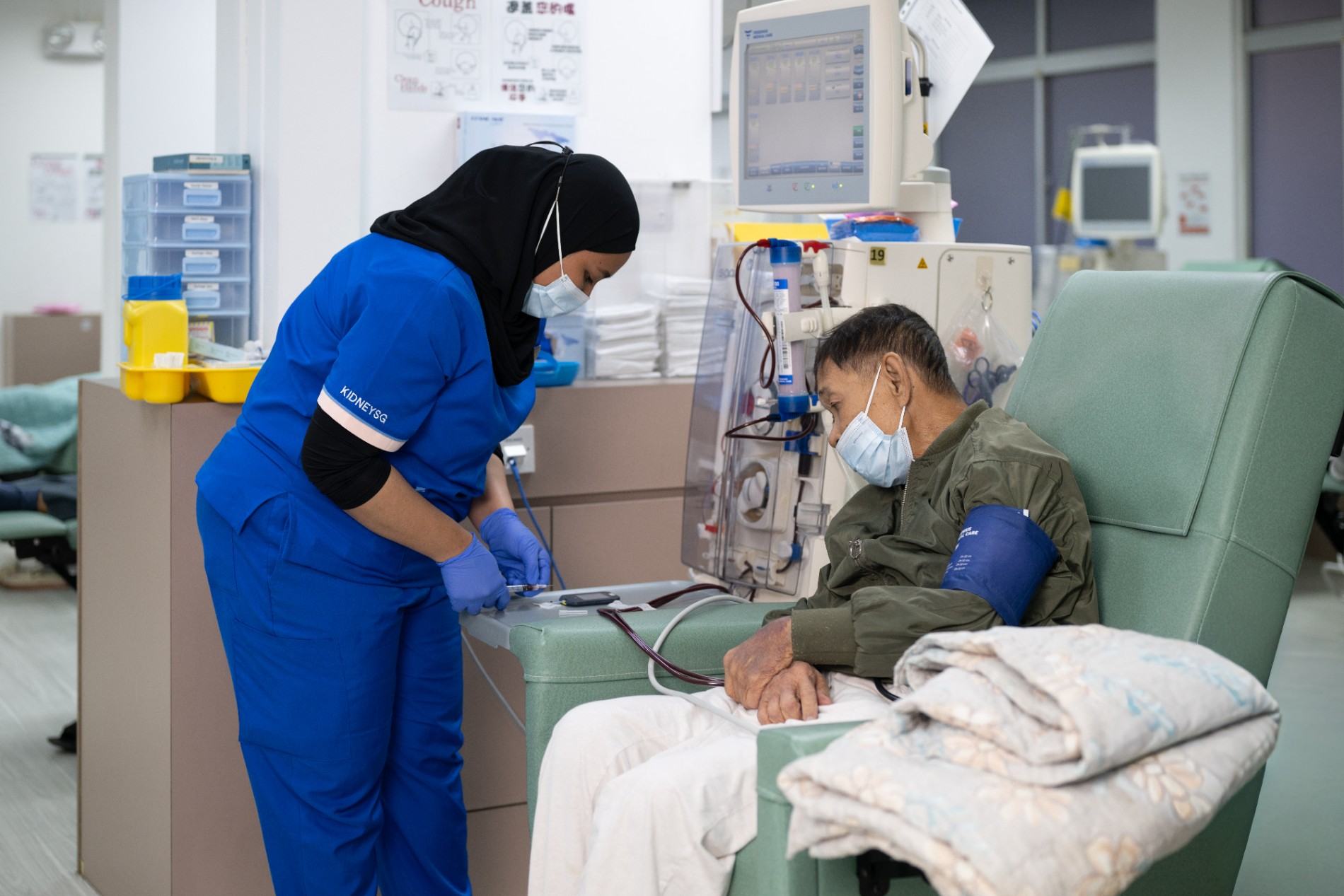
Dialysis is one of the most important medical treatments in modern kidney care. For patients whose kidneys have failed, dialysis is a life-sustaining procedure that replaces the filtration function the kidneys can no longer perform. Understanding what dialysis is, how the machine works, and what to expect from treatment helps patients and their families approach this journey with greater confidence and clarity.
Table of Contents
- What Is Dialysis?
- Why Do People Need Dialysis?
- When Does a Person Start Dialysis?
- How Does a Dialysis Machine Work?
- Understanding the Kidney Dialysis Circuit (Diagram Explained)
- Types of Dialysis
- What Does a Dialysis Session Feel Like?
- How Long Does Dialysis Take?
- Can You Live a Normal Life on Dialysis?
- Frequently Asked Questions About Dialysis
- Dialysis Support in Singapore
What Is Dialysis?
Dialysis is a medical treatment that artificially removes waste products, excess fluid, and salts from the blood when the kidneys are no longer able to do so adequately. Healthy kidneys filter the body’s entire blood supply continuously throughout the day, removing toxins and maintaining the correct balance of electrolytes, fluid, and blood pressure. When kidney function drops to approximately 10 to 15 per cent of normal – a stage known as end-stage renal disease (ESRD) – the kidneys can no longer sustain this process without assistance.
Dialysis replaces roughly 10 to 15 per cent of normal kidney function. It does not cure kidney failure, but it sustains life and allows patients to manage their condition and maintain quality of life.
Why Do People Need Dialysis?
Dialysis becomes necessary when the kidneys fail to the point where waste products accumulate dangerously in the blood. Without dialysis, this build-up causes a condition called uraemia, which leads to severe symptoms including nausea, confusion, breathlessness, and, if left untreated, death.
The most common causes of kidney failure requiring dialysis in Singapore are:
- Diabetes mellitus – the leading cause, accounting for approximately 60 per cent of new end-stage renal disease cases in Singapore
- High blood pressure (hypertension) – the second most common cause
- Glomerulonephritis – inflammation of the kidney’s filtering units; the second most common cause of kidney disease in Singapore
- Other causes include polycystic kidney disease, lupus nephritis, and repeated kidney infections
When Does a Person Start Dialysis?
The decision to start dialysis is made by the nephrologist based on a combination of factors:
- eGFR (estimated Glomerular Filtration Rate) – dialysis is generally initiated when eGFR falls below 10 to 15 mL/min/1.73m², though the exact threshold depends on the patient’s symptoms and overall health
- Symptoms – persistent fluid overload, uncontrolled potassium levels, uraemic symptoms (nausea, confusion, breathlessness), or bleeding tendencies may prompt earlier initiation
- Patient readiness – ideally, dialysis preparation (including vascular access creation) begins well before it is urgently needed, at Stage 4 CKD
Starting dialysis on a planned, elective basis – rather than as an emergency – is associated with significantly better outcomes.
How Does a Dialysis Machine Work?
A haemodialysis machine acts as an artificial kidney. It draws blood out of the patient’s body, passes it through a specialised filter called a dialyser, removes waste products and excess fluid, and returns the cleaned blood to the body. The machine continuously monitors blood flow, pressure, temperature, and the composition of the dialysis fluid throughout the session.
Here is how the process works, step by step:
Step 1 – Vascular Access
Before dialysis can begin, a reliable entry point into the bloodstream must be established. This is called vascular access. The preferred and most common form is the arteriovenous (AV) fistula – a surgically created connection between an artery and a vein, usually in the forearm. The joining of these two vessels causes the vein to enlarge and thicken over several weeks, creating a durable, high-flow access point that can withstand repeated needling.
If a fistula cannot be created, an AV graft (a synthetic tube connecting artery and vein) or a central venous catheter (inserted into a large vein in the neck or chest) may be used instead.
At the start of each session, two needles are inserted into the fistula – one to draw blood out, and one to return it.
Step 2 – Blood Is Drawn Out and Pumped to the Machine
A mechanical blood pump within the dialysis machine draws blood from the patient through the first needle at a carefully controlled rate – typically 200 to 400 millilitres per minute. The blood travels through sterile tubing to the dialyser.
At this stage, a small amount of anticoagulant (such as heparin) is introduced into the tubing to prevent the blood from clotting as it passes through the machine.
Step 3 – Filtration Inside the Dialyser
The dialyser – also called the artificial kidney – is the core component of the machine. It is a cylindrical device packed with thousands of tiny hollow fibres, each made of a semi-permeable membrane.
Blood flows through the inside of these hollow fibres. Simultaneously, a specially prepared cleansing fluid called dialysate flows in the opposite direction around the outside of the fibres. The countercurrent flow maximises the concentration gradient between the blood and dialysate, making filtration more efficient.
Waste products such as urea, creatinine, and excess potassium pass from the blood through the pores in the semi-permeable membrane into the dialysate – a process called diffusion. Larger molecules, such as proteins and red blood cells, are too big to pass through the membrane and remain safely in the blood.
Step 4 – Fluid Removal (Ultrafiltration)
Many dialysis patients retain excess fluid between sessions because their kidneys can no longer excrete it. The dialysis machine uses controlled pressure to pull this excess fluid out of the blood through the membrane into the dialysate – a process called ultrafiltration. The target amount of fluid to be removed is calculated before each session based on the patient’s weight gain since their last treatment.
Step 5 – Cleaned Blood Is Returned to the Body
After passing through the dialyser, the cleaned blood travels through an air detector and bubble trap – safety mechanisms that ensure no air enters the patient’s bloodstream – before being returned to the body through the second needle.
This circuit – blood out, filter, blood back – runs continuously throughout the session, typically treating the patient’s entire blood volume several times over the course of treatment.
Understanding the Kidney Dialysis Circuit (Diagram Explained)
A standard kidney dialysis diagram shows the following circuit:
- Patient – blood exits through the arterial needle in the AV fistula
- Blood pump – propels blood through the circuit at a controlled rate
- Heparin pump – introduces anticoagulant to prevent clotting
- Arterial pressure monitor – detects any blockage or resistance in the blood flow before the dialyser
- Dialyser – the hollow fibre filter where waste and fluid are removed; dialysate flows in the opposite direction on the outside of the fibres
- Venous pressure monitor – checks pressure as blood returns to the patient
- Air detector and clamp – safety device that stops the machine if air is detected
- Patient – clean blood returned through the venous needle
The dialysate circuit runs in parallel, with fresh dialysate supplied to the dialyser and used dialysate (containing waste) drained away continuously.
Types of Dialysis
There are two main types of dialysis:
Haemodialysis (HD) uses a dialysis machine to filter blood externally, as described above. It is performed three times per week at a dialysis centre, with each session lasting three to four hours.
Peritoneal dialysis (PD) uses the peritoneal membrane – the natural lining of the abdominal cavity – as a filter. A sterile dialysis solution is introduced into the abdomen through a catheter, dwells to absorb waste, then is drained and replaced. It can be performed at home, either manually during the day (CAPD) or overnight using an automated machine (APD).
Haemodiafiltration (HDF) is an advanced form of haemodialysis that adds convection to diffusion, enabling the removal of larger toxin molecules. Clinical evidence shows it reduces mortality compared to standard HD.[1]
What Does a Dialysis Session Feel Like?
For most patients, haemodialysis is not painful. You may feel:
- Mild discomfort during needle insertion at the fistula site
- A sense of tiredness or fatigue during or after the session, which often improves over time
- Occasionally, muscle cramps or dizziness if blood pressure drops during treatment
- A general feeling of being “washed out” for a few hours after the session
Staff at the dialysis centre monitor patients continuously throughout the session and manage any discomfort or complications as they arise.
How Long Does Dialysis Take?
A standard haemodialysis session lasts approximately three to four hours, performed three times per week – typically on alternating days such as Monday, Wednesday, and Friday, or Tuesday, Thursday, and Saturday. The exact duration may vary depending on the patient’s body size and level of kidney function.
Patients typically spend around 12 hours per week at the dialysis centre for treatment sessions.
Can You Live a Normal Life on Dialysis?
Yes – with adjustments. Many patients on dialysis continue to work, travel, socialise, and live actively. Key considerations include:
- Attending all scheduled sessions consistently – missing sessions allows toxins and fluid to accumulate
- Following dietary guidelines for fluid, sodium, potassium, and phosphate
- Taking all prescribed medications
- Staying active within your physical capacity
- Seeking support from your care team, social worker, and peer support networks when needed
At KDF, our wrap-around care programmes are designed to support patients in maintaining the best possible quality of life alongside their dialysis treatment.
Frequently Asked Questions About Dialysis
What is dialysis and how does it work? Dialysis is a treatment that removes waste products, excess fluid, and salts from the blood when the kidneys have failed. Haemodialysis uses a machine and dialyser to filter blood externally; peritoneal dialysis uses the lining of the abdomen as a natural filter.
How long can a person live on dialysis? Life expectancy on dialysis varies widely depending on age, overall health, and adherence to treatment. Many patients live for a decade or more on dialysis with good management. A successful kidney transplant generally offers better long-term outcomes.
Do you still urinate if you are on dialysis? Some patients on dialysis retain residual kidney function and continue to produce small amounts of urine. Over time, urine output typically decreases as the kidneys continue to decline. Dialysis removes fluid that the kidneys can no longer excrete.
What waste is removed during dialysis? Dialysis removes urea, creatinine, potassium, phosphate, and other small waste molecules from the blood, as well as excess fluid. It does not remove all substances the kidneys would normally manage – for example, standard haemodialysis is less effective at removing larger middle molecules.
How serious is being on dialysis? Dialysis is a life-sustaining treatment for kidney failure. It requires a significant commitment of time and lifestyle adjustment. However, with proper care, dietary compliance, and support, many dialysis patients live productive, meaningful lives.
Dialysis Support in Singapore
If you or a loved one has been diagnosed with kidney failure and requires dialysis, the Kidney Dialysis Foundation (KDF) is here to help. KDF provides subsidised haemodialysis and haemodiafiltration for needy kidney patients across 15 centres in Singapore, alongside comprehensive wrap-around patient support including dietary counselling, physiotherapy, psychosocial care, and patient education.
Contact KDF today to find out about eligibility, our dialysis programmes, centre locations, and how we can support you at every stage of the kidney failure journey.
Resources
[1] The CONVINCE Trial Investigators (NEJM) – High-Volume Haemodiafiltration versus High-Flux Haemodialysis for Kidney Failure (CONVINCE): A Randomised Trial